Why I no longer want my data sent to the USA
Patriot Act, CLOUD Act, scandals: what happens when your documents go through US servers. And local alternatives that work.
 Souveraineté
I long thought “digital sovereignty” was a civil servant hobby or a campaign line. That as long as it worked, the rest was politics.
Then I read, in order:
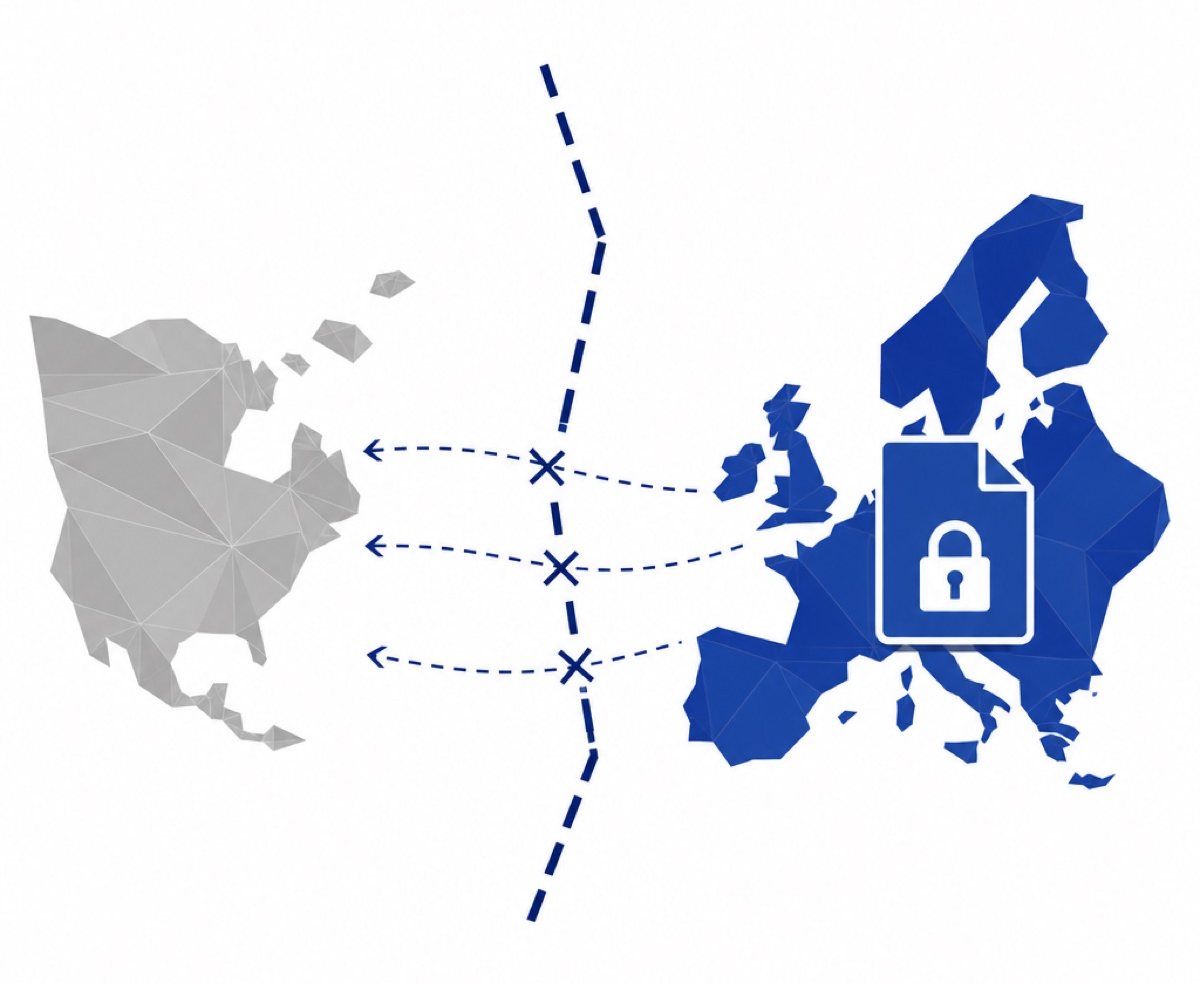
- The Patriot Act (2001), letting US federal agencies demand data from any US company, including data stored outside the USA.
- The CLOUD Act (2018), explicitly extending that obligation to foreign servers of US vendors.
- A data protection regulator reminding that these laws apply even when the vendor has a subsidiary where you are, even when data is encrypted (the key can be requisitioned too).
And I changed my mind.
It is not anti-American. It is pro-autonomy.
Let us be clear: I have nothing against the United States. I use a MacBook, my servers run largely on US open source, I like Stripe and I long liked Google. The issue is not America. The issue is that my most sensitive documents should not be reachable by an actor I do not control, under law I did not vote for, with rules that can change overnight.
It is the same reasoning as keeping your keys on you instead of leaving them with a friendly neighbour. Sympathy has nothing to do with it.
What tipped me over concretely
Three moments:
- In 2023, the scandal of involuntary collaboration between certain cloud LLMs and prompts containing proprietary code at Samsung. Three engineers fired. Model code absorbed into training.
- In 2024, a silent update by a US cloud vendor that turned on data sharing by default to “improve the service” — weeks before a funding round.
- In 2025, brutal suspension of several Google Workspace accounts of SMEs, with no notice, after erroneous automated reports. No appeal for three weeks.
These are not malice. They are logical consequences of handing your document backbone to a third party outside your legal framework.
Alternatives that actually work
For each foreign tool we use daily, there is today a credible local alternative. Here are ones we tested.
| Use | Foreign tool | Sovereign alternative |
|---|---|---|
| Business mail | Google Workspace | Infomaniak, Mailo, OVH Pro |
| Video | Zoom, Teams | BBB, Tixeo, Whaller |
| Storage | Drive, Dropbox | Infomaniak kDrive, OVH NextCloud |
| Notes / docs | Notion, Evernote | Hedgedoc, Outline (self-hosted) |
| Office suite | Microsoft 365 | LibreOffice, OnlyOffice |
| Project management | Trello, Asana | Tracim, Crisp |
| CRM | HubSpot, Salesforce | Axonaut, Sellsy |
| Generative AI | ChatGPT, Claude | Arobass (on your premises), Mistral |
| Web hosting | AWS, Azure | Infomaniak, OVHcloud, Scaleway |
None of these alternatives is perfect. Several are less integrated than their US equivalents. Some cost a bit more. But they share one thing that changes everything: they fall under your country’s law, and you have leverage over their terms.
The real cost of migration
Migration takes time. Honestly:
- Mail: 2–3 days for a 10-person SME, external provider included
- Storage / docs: 1 week smoothed, in parallel with daily use
- AI: 1 day install, 2 h training (if done well)
- The rest: very variable
That is shorter than reacting to a leak, an account suspension, or unfavourable term changes. And you can plan over 12 months, not in panic.
If you want to start with AI — the most visible and biggest productivity lever today — let’s talk.
15-day trial
See AroBox on your real documents
No commitment. We’ll tell you honestly if it fits your business.
Request a trial